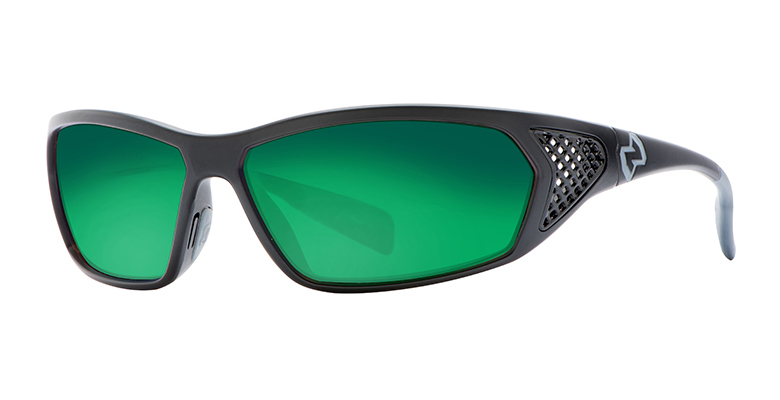
Sunglasses: Good for Your Health
Good sunglasses do much more than just make a fashion statement: they protect your eyes from damaging UV.
October 19, 2014
One recent medical study compared two groups of Chesapeake commercial fishermen: those who used sunglasses and those who didn't. The group without sunglasses had three times the number of serious cataracts as those who protected their eyes.
Dr. Donald Pitts, a professor emeritus at the University of Houston and a consultant to the American Optometric Association (AOA), is adamant about the health problem: "UV radiation is so dangerous that the eyes shouldn't be exposed to it at all," he says.
Since you can't live in a darkened room forever, you'll need to protect yourself. To understand how to buy the right sunglasses, you should understand the dangers posed by sunlight to your eyes. Light, which comes in both visible and invisible ranges, is absorbed by the eyes and, under normal conditions, as much as 25% of your entire body energy is directly related to the eyes. It's no wonder that eye problems can affect your entire well-being.
In the invisible spectrum, ultraviolet radiation has two wavelengths: UV-A (which causes sunburn); and UV-B, which is directly linked to eye damage. Ultraviolet radiation is greatest at high altitudes where the atmosphere offers little protection, but it is present in damaging amounts even at sea level. When absorbed by the cornea, UV rays have a blistering effect. One surprising side note is that many common drugs, such as antihistamines and antibiotics, can increase the sensitivity of the eyes to UV burning.
The effects of sun and glare are hardly new, however. Thousands of years ago, the Inuit Indians in the Arctic cut slits in animal bones to protect their vision. Today, as our ozone layer dwindles away, eye protection has never been more important.
Among the eye problems directly linked to UV light are cataracts, pterygium (a growth on the eye), and corneal blisters (which skiers know as "snow blindness"). In the visible spectrum, blue light is equally hard on the eyes, which have trouble focusing on blue objects, and the eyestrain caused by too much blue light can lead to keratitis, a painful swelling of the cornea.
It should come as no surprise in a society with tax dollars to spend on endless research projects that more than a little effort has been spent studying your eyes. But there's good news and there's bad news. The good news is that the American National Standards Institute (ANSI) has developed standards by which the ultraviolet protection of sunglasses are tested and labeled. The bad news is that ANSI has no enforcement teeth, so the consumer faces a host of misleading advertising claims. Sunglasses that have been tested and meet ANSI standard Z80.3 fall into one of three categories: cosmetic, general purpose, and special purpose. Cosmetic glasses are intended for fashion use, and are only required to screen 70% of the UV-B and just 20% of the UV-A rays. General purpose glasses must stop 95% of the UV-B rays and 60% of the UV-A.
For anyone planning to enjoy the pleasure of the outdoors, the absolute minimum standard should be the "special purpose" sunglasses which screen 99% of the UV-B and 60% of the UV-A. An even higher standard has been set by the AOA, which requires glasses bearing their Seal of Approval to screen 99% of all ultraviolet rays.
"But," you say, "I've got a good pair of shades already. Why spend money on expensive glasses? What I've got is better than nothing." In fact, that's completely wrong. A bad pair of sunglasses, like cheap drugstore glasses, actually cause more damage because they allow your pupils to dilate so more hazardous ultraviolet rays reach the eyes. The starting point for choosing sunglasses is to carefully read the labels on the glasses and pick those with the highest levels of protection. If the sunglasses don't bear either ANSI or AOA labels, don't buy them.
Once you've found a brand or model with high UV protection, consider the optical material and lens color.
Sunglasses are made of either optical glass or plastic, which is usually either polycarbonate or a substance called CR-39. Glass is both heavier and breakable, although more scratch resistant than either of the plastics. Polycarbonate and CR-39, on the other hand, are light but easily scratched and generally lower in optical quality. Glass is probably the least desirable for active outdoor use, since your sunglasses may have to survive some rough treatment.
When considering any sunglasses, hold them at arm's length and move them up and down or sideways against straight lines to see if there is any distortion that indicates poor optics. A lenses with distortion can lead to headaches, fatigue and eyestrain as your eye struggles to correct the imperfections.
The lens color is also important for more than just looking cool. The color of the lenses can improve (or reduce) your vision in certain situations, but there is a delicate balance between removing undesirable colors and creating more problems than are solved. Sunglasses used by drivers, for example, must not alter the colors of traffic lights or emergency signs.
At the same time, major color shifts can lead both to nausea and eye strain as your brain attempts to change known objects back to their real colors in spite of the filtering effect. Purple glasses may be stylish, but they won't help your vision or your health.
Gray lenses are the most common, since there is no shift in the colors you see, but they won't improve your vision. Lenses that filter out blue light, on the other hand, can actually increase visibility. Your eyes are the least sensitive to blue, which is why a bright blue light often seems to have a "halo" around it. And, because blue light is scattered by dust or moisture in the air, there is a loss of depth perception and a deterioration of your vision on hazy or foggy days.
With blue-filtering sunglasses, however, hunters will find that their depth perception is greatly improved, and sailors can spot landmarks that were invisible to the naked eye. Brown lenses filter the blue light while changing colors a little more than gray and, while amber is another good haze lens, it may not be right for everyone.
Polarizing sunglasses have long been popular with boaters and anglers because they reduce glare and allow you to actually see "into" the water. When navigating through shallow water or searching for the perfect pool for fly-fishing, the polarizing element (usually a filter sandwiched between glass or plastic) eliminates water sparkle and accentuates color changes that signal depth. On the down side, polarized sunglasses also reduce contrast, making it hard for skiers to spot moguls on a bright slope.
The amount of light transmission is also a factor to consider, with most normally tinted sunglasses reducing the light by 75-85%. The toughest test for sunglasses is mountaineering, where the thin altitudes barely filter the sun's rays and ice reflects back the full glare, so a number of companies produce "glacier" glasses that allow as little as 4% of the visible light for optimum protection.
Photochromic glasses are light sensitive and react automatically to light, darkening in bright light while allowing more light to be transmitted in dim areas. Originally created to protect bomber crews from the flash of brilliant explosions, these lenses often come with mirrored finishes and in gradients, where the tinting is not constant from top to bottom. Single gradients are darker at the top than the bottom, while double gradients have a lighter slit in the middle. Most photochromic lenses start at about 70% light blocking and darken to about 80%.
Whatever your style preference, be sure to try on any sunglasses you're considering before you purchase them. Some goggle styles may fit too close to your eyelashes for comfort, and those lenses with double gradients should have the "viewing slit" positioned directly in your line of sight. If possible, take them into direct sunlight to see whether you like the color and the amount of tinting. Remember that cost doesn't directly relate to quality, so follow Dr. Kidd's advice and do some comparison shopping.
Once you've picked your new high-tech sunglasses, take care of them. All lenses, synthetic or glass, will scratch if you put them lens down on a rough surface. Dampen the lens before wiping it clean, especially if it has dried salt or dust on it, and use a clean lens cloth. Sunglasses have come a long way since the early days of "dark glasses." Today, they not only make a fashion statement, but they show your attitude toward eye care as well.
Read more about choosing the right sunglasses:
Sunglasses: How To Find the Perfect Pair
Fishing Friday: New Sunglasses for 2014
Maui Jim Sunglasses: “Pure” Forgetfulness
The Best Five Sunglasses for Boaters: Costa Del Mar vs. Oakley vs. Ocean Waves vs. Onos vs. WileyX
Youngsters think that Tom Cruise invented them, oldsters think first of Gen. Douglas MacArthur, and everyone in between pictures Elvis or the Blues Brothers. In the past few decades, sunglasses have become both fashion statements and health necessities. But the offerings and claims are bewildering, and there are a host of differences in coatings, lens colors, and materials.
"The fact is that if you don't pay attention to the sunglasses you buy," says Dr. James Kidd, "you're almost certain to damage your eyes."
"The fact is that if you don't pay attention to the sunglasses you buy," says Dr. James Kidd, "you're almost certain to damage your eyes."
Kidd, not only an ophthalmic surgeon but an experienced Pacific Northwest outdoorsman, goes on, "Sadly enough, most people spend hours comparison shopping for hiking boots, sleeping bags or back packs. But when it comes to sunglasses, they pick a color and style they like without giving a moments thought to eye protection."
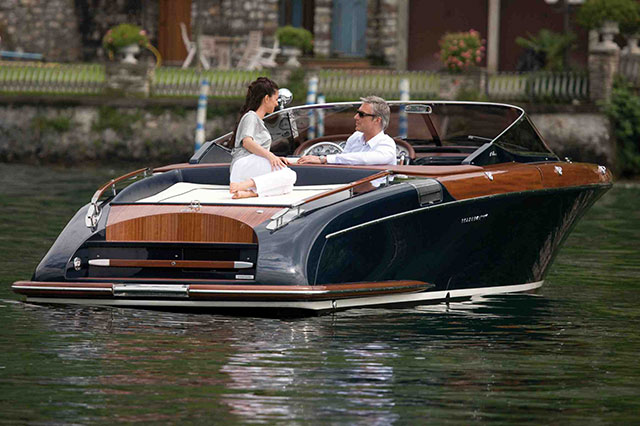
Youngsters think that Tom Cruise invented them, oldsters think first of Gen. Douglas MacArthur, and everyone in between pictures Elvis or the Blues Brothers. In the past few decades, sunglasses have become both fashion statements and health necessities. But the offerings and claims are bewildering, and there are a host of differences in coatings, lens colors, and materials.
The bottom line, however, is to protect your eyes against the ultraviolet (UV) rays of the sun, and the more protection you have, the better for your eyes.
Health Benefits of Wearing Sunglasses
One recent medical study compared two groups of Chesapeake commercial fishermen: those who used sunglasses and those who didn't. The group without sunglasses had three times the number of serious cataracts as those who protected their eyes.
Dr. Donald Pitts, a professor emeritus at the University of Houston and a consultant to the American Optometric Association (AOA), is adamant about the health problem: "UV radiation is so dangerous that the eyes shouldn't be exposed to it at all," he says.
Since you can't live in a darkened room forever, you'll need to protect yourself. To understand how to buy the right sunglasses, you should understand the dangers posed by sunlight to your eyes. Light, which comes in both visible and invisible ranges, is absorbed by the eyes and, under normal conditions, as much as 25% of your entire body energy is directly related to the eyes. It's no wonder that eye problems can affect your entire well-being.
In the invisible spectrum, ultraviolet radiation has two wavelengths: UV-A (which causes sunburn); and UV-B, which is directly linked to eye damage. Ultraviolet radiation is greatest at high altitudes where the atmosphere offers little protection, but it is present in damaging amounts even at sea level. When absorbed by the cornea, UV rays have a blistering effect. One surprising side note is that many common drugs, such as antihistamines and antibiotics, can increase the sensitivity of the eyes to UV burning.
The effects of sun and glare are hardly new, however. Thousands of years ago, the Inuit Indians in the Arctic cut slits in animal bones to protect their vision. Today, as our ozone layer dwindles away, eye protection has never been more important.
Among the eye problems directly linked to UV light are cataracts, pterygium (a growth on the eye), and corneal blisters (which skiers know as "snow blindness"). In the visible spectrum, blue light is equally hard on the eyes, which have trouble focusing on blue objects, and the eyestrain caused by too much blue light can lead to keratitis, a painful swelling of the cornea.

Research: Good News and Bad News
It should come as no surprise in a society with tax dollars to spend on endless research projects that more than a little effort has been spent studying your eyes. But there's good news and there's bad news. The good news is that the American National Standards Institute (ANSI) has developed standards by which the ultraviolet protection of sunglasses are tested and labeled. The bad news is that ANSI has no enforcement teeth, so the consumer faces a host of misleading advertising claims. Sunglasses that have been tested and meet ANSI standard Z80.3 fall into one of three categories: cosmetic, general purpose, and special purpose. Cosmetic glasses are intended for fashion use, and are only required to screen 70% of the UV-B and just 20% of the UV-A rays. General purpose glasses must stop 95% of the UV-B rays and 60% of the UV-A.
Outdoor Use is a Special Purpose
For anyone planning to enjoy the pleasure of the outdoors, the absolute minimum standard should be the "special purpose" sunglasses which screen 99% of the UV-B and 60% of the UV-A. An even higher standard has been set by the AOA, which requires glasses bearing their Seal of Approval to screen 99% of all ultraviolet rays.
"But," you say, "I've got a good pair of shades already. Why spend money on expensive glasses? What I've got is better than nothing." In fact, that's completely wrong. A bad pair of sunglasses, like cheap drugstore glasses, actually cause more damage because they allow your pupils to dilate so more hazardous ultraviolet rays reach the eyes. The starting point for choosing sunglasses is to carefully read the labels on the glasses and pick those with the highest levels of protection. If the sunglasses don't bear either ANSI or AOA labels, don't buy them.
Once you've found a brand or model with high UV protection, consider the optical material and lens color.
Glass or Plastic?
Sunglasses are made of either optical glass or plastic, which is usually either polycarbonate or a substance called CR-39. Glass is both heavier and breakable, although more scratch resistant than either of the plastics. Polycarbonate and CR-39, on the other hand, are light but easily scratched and generally lower in optical quality. Glass is probably the least desirable for active outdoor use, since your sunglasses may have to survive some rough treatment.
When considering any sunglasses, hold them at arm's length and move them up and down or sideways against straight lines to see if there is any distortion that indicates poor optics. A lenses with distortion can lead to headaches, fatigue and eyestrain as your eye struggles to correct the imperfections.

Lens Color Matters
The lens color is also important for more than just looking cool. The color of the lenses can improve (or reduce) your vision in certain situations, but there is a delicate balance between removing undesirable colors and creating more problems than are solved. Sunglasses used by drivers, for example, must not alter the colors of traffic lights or emergency signs.
At the same time, major color shifts can lead both to nausea and eye strain as your brain attempts to change known objects back to their real colors in spite of the filtering effect. Purple glasses may be stylish, but they won't help your vision or your health.
Gray lenses are the most common, since there is no shift in the colors you see, but they won't improve your vision. Lenses that filter out blue light, on the other hand, can actually increase visibility. Your eyes are the least sensitive to blue, which is why a bright blue light often seems to have a "halo" around it. And, because blue light is scattered by dust or moisture in the air, there is a loss of depth perception and a deterioration of your vision on hazy or foggy days.
With blue-filtering sunglasses, however, hunters will find that their depth perception is greatly improved, and sailors can spot landmarks that were invisible to the naked eye. Brown lenses filter the blue light while changing colors a little more than gray and, while amber is another good haze lens, it may not be right for everyone.
Polarizing Details
Polarizing sunglasses have long been popular with boaters and anglers because they reduce glare and allow you to actually see "into" the water. When navigating through shallow water or searching for the perfect pool for fly-fishing, the polarizing element (usually a filter sandwiched between glass or plastic) eliminates water sparkle and accentuates color changes that signal depth. On the down side, polarized sunglasses also reduce contrast, making it hard for skiers to spot moguls on a bright slope.
The amount of light transmission is also a factor to consider, with most normally tinted sunglasses reducing the light by 75-85%. The toughest test for sunglasses is mountaineering, where the thin altitudes barely filter the sun's rays and ice reflects back the full glare, so a number of companies produce "glacier" glasses that allow as little as 4% of the visible light for optimum protection.
Light Sensitivity
Photochromic glasses are light sensitive and react automatically to light, darkening in bright light while allowing more light to be transmitted in dim areas. Originally created to protect bomber crews from the flash of brilliant explosions, these lenses often come with mirrored finishes and in gradients, where the tinting is not constant from top to bottom. Single gradients are darker at the top than the bottom, while double gradients have a lighter slit in the middle. Most photochromic lenses start at about 70% light blocking and darken to about 80%.
Whatever your style preference, be sure to try on any sunglasses you're considering before you purchase them. Some goggle styles may fit too close to your eyelashes for comfort, and those lenses with double gradients should have the "viewing slit" positioned directly in your line of sight. If possible, take them into direct sunlight to see whether you like the color and the amount of tinting. Remember that cost doesn't directly relate to quality, so follow Dr. Kidd's advice and do some comparison shopping.
Once you've picked your new high-tech sunglasses, take care of them. All lenses, synthetic or glass, will scratch if you put them lens down on a rough surface. Dampen the lens before wiping it clean, especially if it has dried salt or dust on it, and use a clean lens cloth. Sunglasses have come a long way since the early days of "dark glasses." Today, they not only make a fashion statement, but they show your attitude toward eye care as well.
Read more about choosing the right sunglasses:
Sunglasses: How To Find the Perfect Pair
Fishing Friday: New Sunglasses for 2014
Maui Jim Sunglasses: “Pure” Forgetfulness
The Best Five Sunglasses for Boaters: Costa Del Mar vs. Oakley vs. Ocean Waves vs. Onos vs. WileyX